Ena izmed nalog, ki so del mojega prostovoljnega dela tu v Cartageni, je tudi EVS dnevnik. Tega naj bi pisal približno enkrat mesečno. Prvih nekaj zapisov bo v angleščini, kasneje, ko se izboljšam v moji Španščini, pa upam, da bom lahko kaj napisal tudi v španskem jeziku.
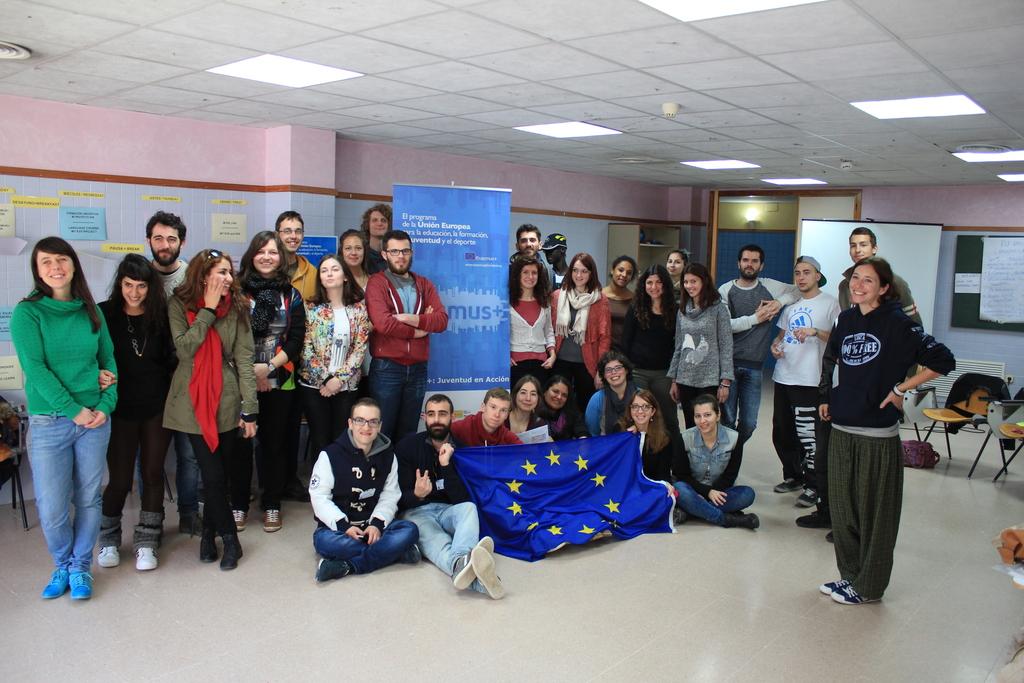
This weekend Association de amigos de vela latina organized a introductory sailing course for the interested public and us, the volunteers working in the organization.
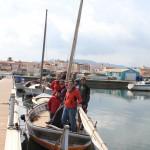
The course started on Friday evening. We were first introduced with the presentation about what the lateen sail is, where it originates from and how it developed. We briefly skimped across the history of lateen sails and their importantce in Catragena. After the introductory presentation, we took a walk into the haurbour where the association has their sailing boats stored or moored. We took a look at the different boats, the 21 palm sized, that are used for the summer regattas, and the bigger, 42 pals long sailing boats. We also mentioned that the organization is hard at work renewing some of the boats that used to be lateen sail boats before they were changed into the motor boats. After many years of using the boat as a motor boat, the owners decided to change it back to the sailing-type boat. The association is a great help with organizing and helping out with the the renewal. After the visit to the marina, we went back to the community center in Santa Lucia, where we continued our theory part of the course. We had the introduction to the techniques of sailing, the parts of the boat and the expressions used in sailing. We were also shown a couple of the basic knots that are useful for mooring the boat or other occasions.
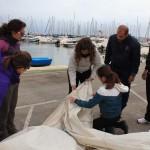
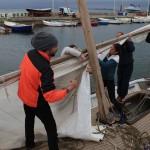
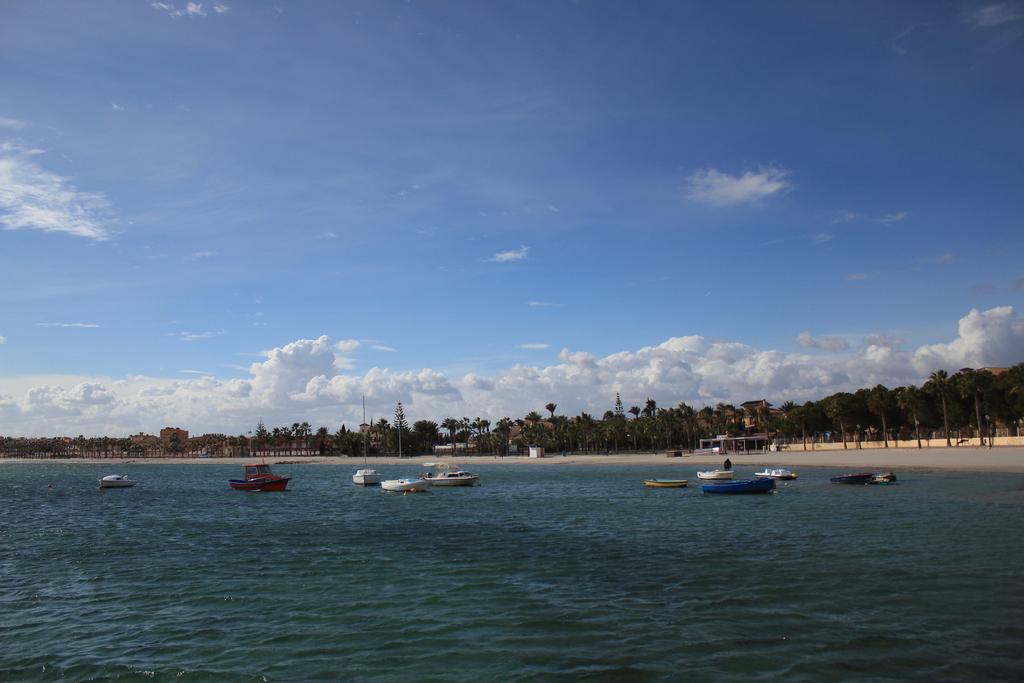
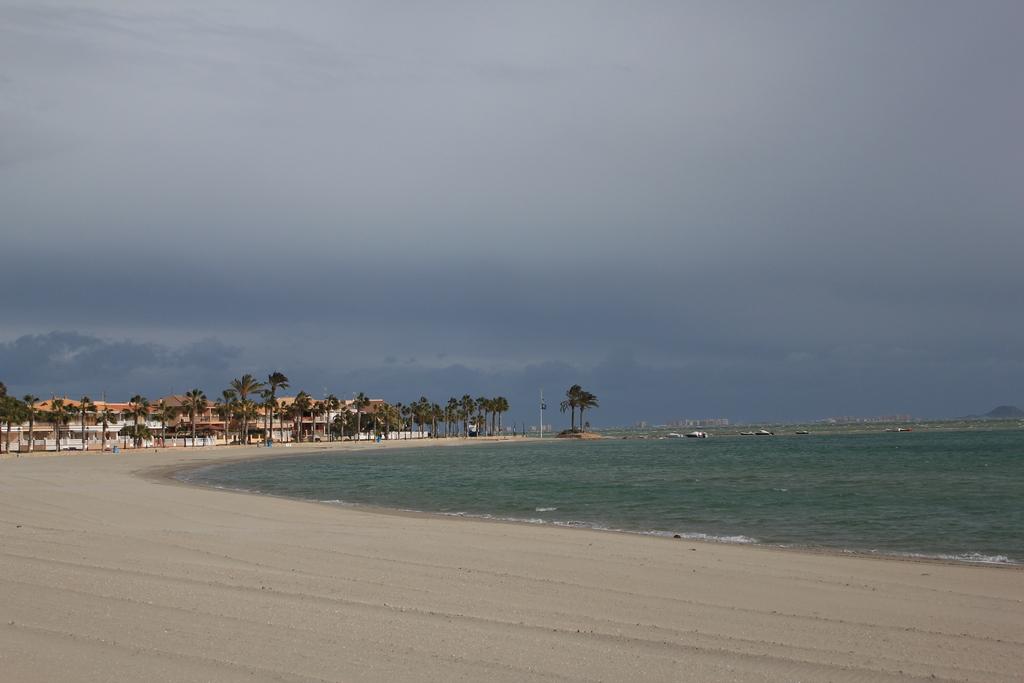
On Saturday morning we drove to Mar menor, where the association has some more boats moored. The idea was to have the first day of sailing and then to repeat the sailing a day after. when we came there, however, it became obvious, that the weather will not be good enough to go to the sea. The wind was too strong at about 10 knots and there was a high chance of rain. However, all the members of the course came and we did have a session with all of them. We went to the boat with which we were supposed to sail, and prepared it as if we would go for a real sail. The lateen boat requires even more preparation than a traditional sailing boat and the setup at the beginning is just as important as the knowledge about how to act in the sea. We were shown how to properly set up the sail, how, where and why to tie the ropes, how to raise up the sail and how to maneuver the boat. The whole operation actually lasts longer that I imagined and the additional explanation made it even longer. We did some dry runs and at the end we tidied the boat and put everything back to its place.
On Sunday, the third day of the course, we finally made it to the sea. The weather was looking promising, the wind was good for a beginner’s course and there was even a bit of sunshine. We have setup the boat as we learned the day before, put on the life jackets and were dragged out of marina by one of the marina staff and her orange motor boat. The wind was blowing from north-east and since we had the lateen sail on the starboard side of the boat (es.: estribor), we first sailed in a non-optimal way. One of the drawbacks of the lateen sail is that it’s not equally efficient if the wind is blowing from the port as opposed to starboard side. Depending on how you setup the sail in the beginning one of this sides will be the “bad sailing” (es.: navegar a la mala). with this technique, we sailed about half way to the biggest island in Mar menor, called Barón. Then it was time to turn. Because of the low wind, we had some troubles. The mood in the boat got a little bit tense, when it started lightly raining. But after about 10 minutes and two or three failed attempts, we finally managed. On the way back, we were using the whole potential of the sail, so we theoretically cached more wind power. After some smooth sailing, we came close to the marina. We called the lady that took us out of the marina, to come get us again, but she wasn’t answering the phone. As the rain stopped and we had time, we decided to do another zig-zag to come closer to the marina. The two turns that we had to do, went much smoother than the first one. In a coupe of minutes we were close to the gate. Now also our tow-boat-lady answered her phone and came to get us. We were on solid land in a matter of minutes. After disassembling the boat, we went for a beer and finished up the nice day.
The sailing course was nice despite a few nervous moments. The fact that it was solely in Spanish was a bit of an annoyance for me, because I picked-up less that I’d be able to if it’d be in English. However, I can understand that the paying participants have priority. Anyway, it was nice and I did learn some basics. Hopefully, during my stay here, I’ll have many more opportunities to learn about sailing (and other activities for that matter).
I was advised not to take the camera on board, so sadly, I don’t have the photos of the sailing itself.